







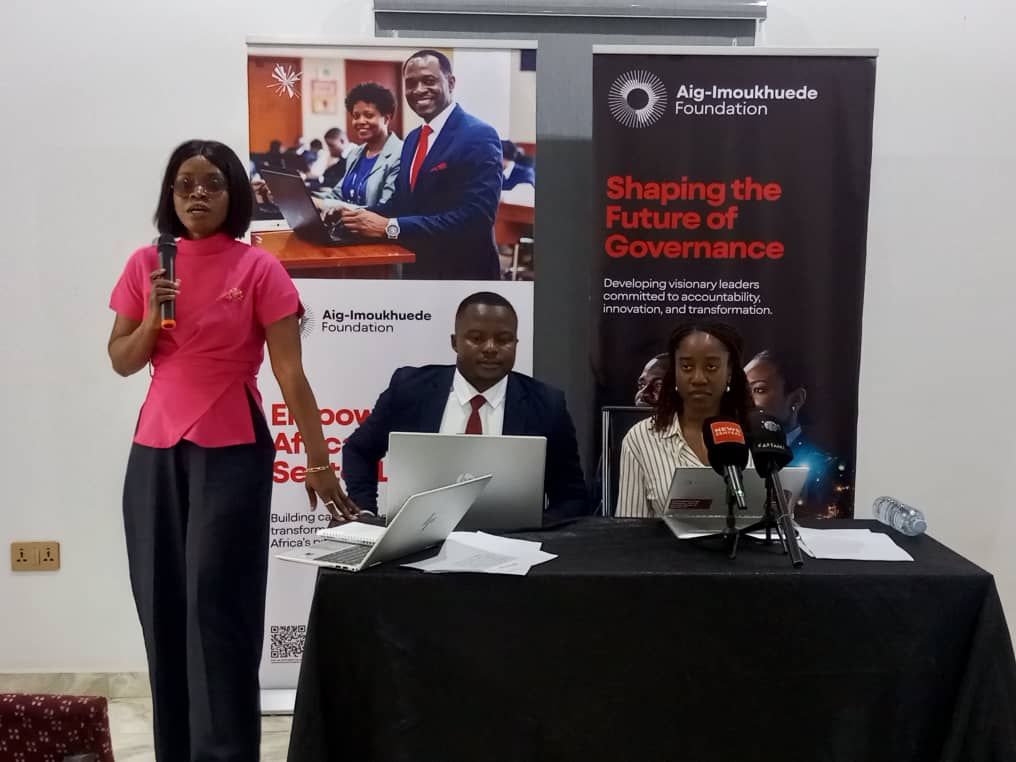
The Aig-Imoukhuede Foundation has identified poor implementation of government policies and reforms as one of the major obstacles to effective public service delivery in Nigeria, declaring that the country does not lack ideas but the commitment and institutional capacity to translate them into lasting results.
The Director of Programmes of the Foundation, Chioma Njoku made this known at a pre-launch media briefing in Abuja ahead of the official unveiling of the Foundation’s Reform Playbook, a practical guide designed to help political leaders, public servants and government institutions implement sustainable reforms.
Njoku observed that virtually every ministry, department and agency (MDA) in Nigeria has developed strategies, frameworks and committee reports aimed at improving governance. However, she noted that the country continues to struggle with translating these well-documented ideas into effective public services that remain functional beyond the tenure of individual political officeholders.
She attributed the persistent challenges in public service delivery to several factors, including political patronage, corruption, institutional resistance and the inability to sustain reforms across successive administrations.
Citing data from the National Bureau of Statistics (NBS), Njoku recalled that approximately 133 million Nigerians, representing about 63 per cent of the population, were multidimensionally poor in 2022, underscoring the urgent need for effective governance and improved service delivery.
According to her, an independent review commissioned by the Foundation in 2023 and completed in 2024 identified political patronage and corruption as the biggest barriers to implementing reforms within government institutions.
She explained that some government agencies originally established to address specific national challenges eventually become instruments of political influence and employment opportunities for vested interests, making their restructuring or abolition difficult even when their original mandates have become duplicated or unnecessary.
Njoku cited the Oronsaye Report, submitted in 2012, which recommended the rationalisation and consolidation of government agencies to eliminate duplication and reduce the cost of governance. She noted that the Federal Executive Council did not approve its implementation until February 2024, highlighting the prolonged difficulties associated with implementing institutional reforms in Nigeria.
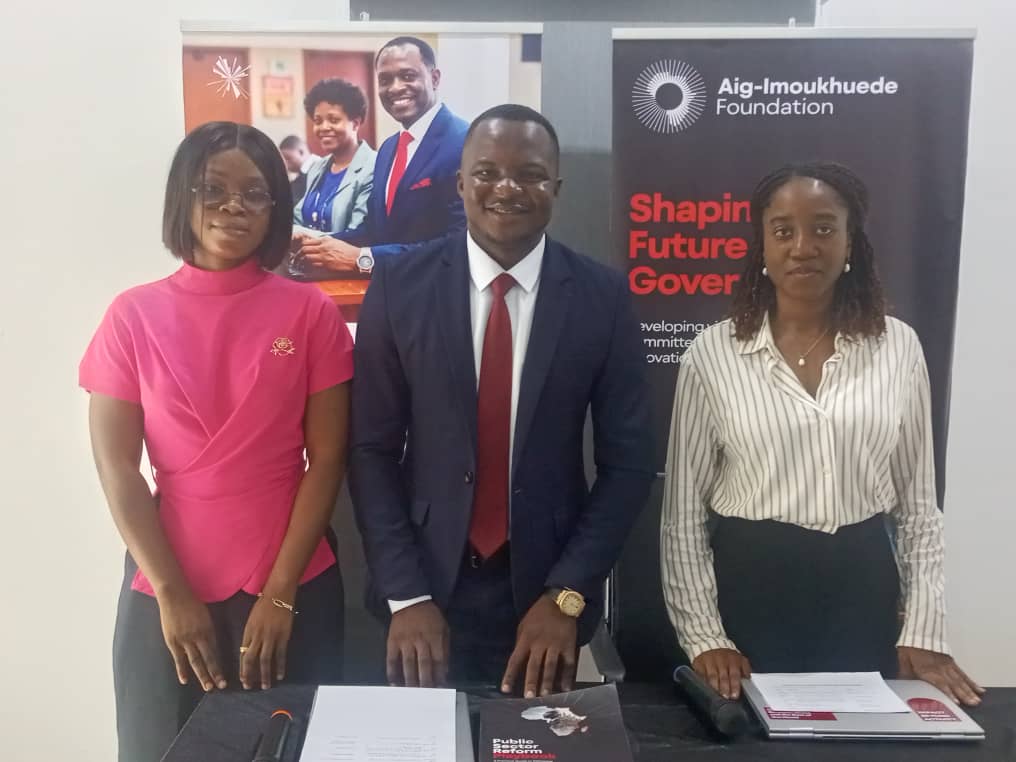
REFORM PLAYBOOK: A PRACTICAL GUIDE TO GOVERNMENT TRANSFORMATION
The Foundation’s Reform Playbook, developed after three years of research and engagement with public sector stakeholders, is designed to bridge the gap between policy formulation and actual implementation.
The publication provides practical guidance for governors, commissioners, coordinators, directors and reform implementation teams on how to identify achievable reform priorities, sequence interventions, establish implementation structures and manage the critical first 90 days following the announcement of a reform initiative.
It also outlines strategies for protecting reform resources through transparent procurement processes, strengthening institutional controls, managing resistance to change, measuring progress through credible reform scorecards and ensuring that successful reforms become embedded in laws, institutional structures and organisational culture.
Njoku explained that the objective is to ensure that reforms are not tied to individual political leaders or officeholders but are institutionalised as national development priorities capable of surviving changes in government and leadership.
The Playbook also features Nigerian case studies covering immigration, the business environment, ports administration, treasury management and taxation.
In addition, it examines experiences from other African countries, including Rwanda, Kenya, Egypt, Mauritius and Côte d’Ivoire, drawing lessons that can be adapted to Nigeria’s peculiar governance and institutional realities rather than simply replicated.
To support practical application, the publication contains ready-to-use tools, including diagnostic and reform design templates, a comprehensive checklist covering the reform implementation process and a maturity model to help organisations identify gaps and determine the steps required to achieve sustainable transformation.
POLITICS, PEOPLE AND ACCOUNTABILITY AT THE CENTRE OF REFORMS
Highlighting what distinguishes the Reform Playbook from conventional policy documents, Njoku said it recognises the political realities surrounding government reforms and encourages reform leaders to begin with achievable priorities, build public support and demonstrate measurable progress.
She stressed that successful reforms require the involvement of stakeholders, transparent communication and a clear demonstration of results that citizens can understand and evaluate.
According to her, the Playbook draws extensively from the Foundation’s engagement with hundreds of public servants through its Public Leaders Programme, feedback from alumni implementing reforms, evidence from across Africa and contributions from government forums, state officials, heads of agencies and experts in public policy and monitoring and evaluation.
She added that feedback from these engagements helped shape the document to reflect the practical realities of governance at the state level, particularly differences in budgetary allocations, institutional capacities, data availability and the roles of the legislature, local governments and traditional institutions, including kings, emirs and obas.
FREE ACCESS TO THE PUBLIC
The Director of Programmes disclosed that the Reform Playbook would be freely accessible on the Aig-Imoukhuede Foundation’s website, making it available to political leaders, bureaucrats, civil servants and other stakeholders interested in designing and implementing effective reforms.
She announced that the official launch of the publication would take place on **Thursday, November 19, 2026, at the AIG/ASCC Event Centre**, in a hybrid format that will accommodate both physical and virtual participants.
Njoku emphasised that meaningful institutional transformation requires time, consistency and disciplined implementation. However, she maintained that early achievements can be demonstrated when reforms are properly planned, adequately monitored and effectively communicated.
She further called on public institutions to improve their communication strategies to enable citizens to understand when reforms commence, appreciate the actions being taken and clearly see the direction in which government is moving.
The Foundation’s Reform Playbook is therefore positioned as a practical resource for strengthening governance, improving public sector performance and ensuring that government policies translate into tangible benefits for Nigerians.